
LED Basics
Our eyes are able to see colors with wavelengths between 380 and 750 nanometers. The different colors we see from an LED mask are actually emissions of different wavelengths. Red has the longest wavelength, while violet has the shortest.
The wavelength of ultraviolet light is shorter than that of violet light. Similarly, the wavelength of infrared light is longer than that of red light. They affect our skin, but we cannot see them.
Think of wavelength (measured by the distance between each wave crest) like an ocean wave, which can be huge and fast like a tsunami-level wave (high frequency, low wavelength) or gentle and slow like ripples on a calm ocean (low frequency, high wavelength).
Light energy can penetrate the outer layer of the skin without damaging it, while sending energy to different layers beneath the skin’s surface, triggering a variety of beneficial chemical reactions, much like how plants use the sun’s energy to nourish and grow.
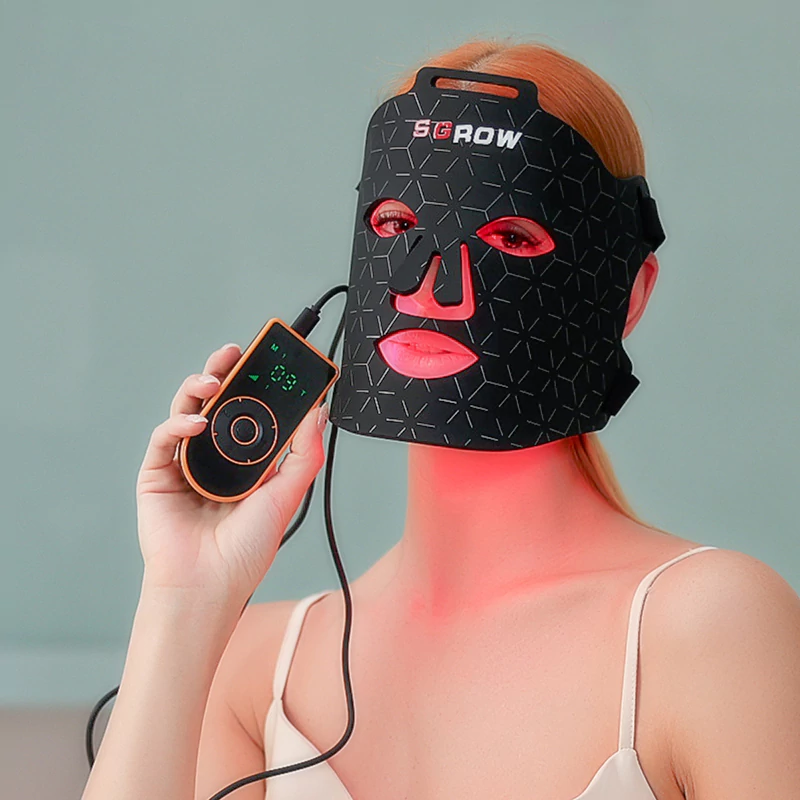
How to choose a home LED mask?
There are so many kinds of LED masks on the market, with similar appearance design but different models, functions, prices, usage time, etc., choosing the right mask can seem like a daunting task. That’s why we made this comparison for you.
Safety
Safety is a top priority. We look for reputable manufacturers and retailers backed by professional experts such as doctors and beauticians, and products with enough real user reviews.
When choosing between different brands and products, we consider the following aspects:
- Wavelength – which wavelengths and features
- Treatment modes/colors – how many
- Number of LED diodes (bulbs) and their grade
- Price
- Mask fit
- Mask material
Wavelengths
Each wavelength of light has its own unique skin benefits. Choose a device that provides the wavelengths your skin needs.
Infrared light – invisible to the human eye, but penetrates deeper into the skin for greater results.
Red – anti-aging (reduces fine lines, wrinkles, makes skin look softer)
Blue – acne control, acne healing
Green – pigmentation. Lightens dark spots.
Yellow – sunburn. Speeds up skin recovery
Treatment Modes/Colors
The most basic machines offer a single color treatment mode. More comprehensive, multi-functional LED masks offer multiple treatment modes that combine different wavelengths with adjustable intensity levels to suit your skin’s needs.
Research shows that combinations of wavelengths can provide greater efficacy at the same time. User convenience is provided when treatment modes include different wavelength treatments in different sequences (such as red first, then blue).
The key here is to choose an LED mask with specific LED colors that fit your lifestyle and your needs. Just because you see different colors from the mask, it doesn’t mean it offers that many wavelengths.
led-mask-colors Some companies sell rainbow colors. Take violet and magenta light, for example. They may look similar, but they are not exactly the same. When you mix red and blue wavelengths, your eyes perceive that color as purple, but it is very different from violet, a spectral color with a single wavelength. Similar to purple, pink and magenta are non-spectral colors that are created by mixing different wavelengths.
The yellow on a computer screen is created by mixing red and green light, but the yellow created this way is different from the spectral yellow in a rainbow. Some masks claim they use white light. There is actually no such thing as a white wavelength. It is a mix of many different spectrum colors.
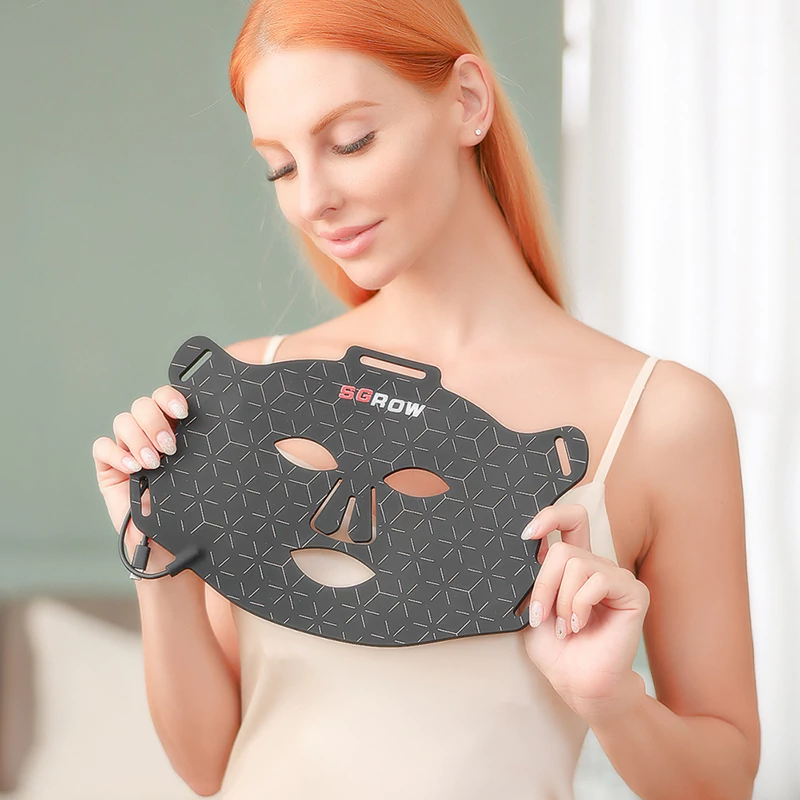
The number of LED lights and their grade
Here, both quantity and quality are important. LED treatments can produce amazing long-term results with continued use. Look for masks that are durable and use medical-grade LED lights.
Price
Price is usually related to the number of LED lights, the grade of LED lights, and the materials used in the mask. Keep in mind that your skin condition will change over time, so you might consider choosing a mask that offers at least 3 wavelengths.
Think about what you would pay for a phototherapy (light) facial at a professional aesthetic clinic. By doing this at home, you can save time. It pays to equip yourself with a professional-grade mask.
Mask Fit
We prefer face-shaped LED masks because this form of LED mask is more suitable for home use environments, as the mask conforms to the contours of the face with minimal gaps between the mask and the skin, allowing the skin to breathe and perspire inside the mask.
Compared with flat LED panels or arched LED devices, face-shaped LED devices allow users to lie down comfortably during 10-20 minute treatments and save storage space. Most importantly, this design does not affect other people in the same household, preventing them from staring or being disturbed by bright lights.
Mask Material: Polycarbonate, Plastic, or Silicone
From a material perspective, we prefer polycarbonate and plastic over bendable silicone. Because they leave a gap between the mask and the skin, allowing the skin to breathe and perspire. It is also more durable because the light is firmly fixed and will not wear out due to constant bending.
Polycarbonate provides up to 89% light transmittance, while plastic provides 80%. Polycarbonate has excellent impact and weather resistance, while plastic has average impact and weather resistance. Polycarbonate is self-extinguishing, while plastic is flammable.