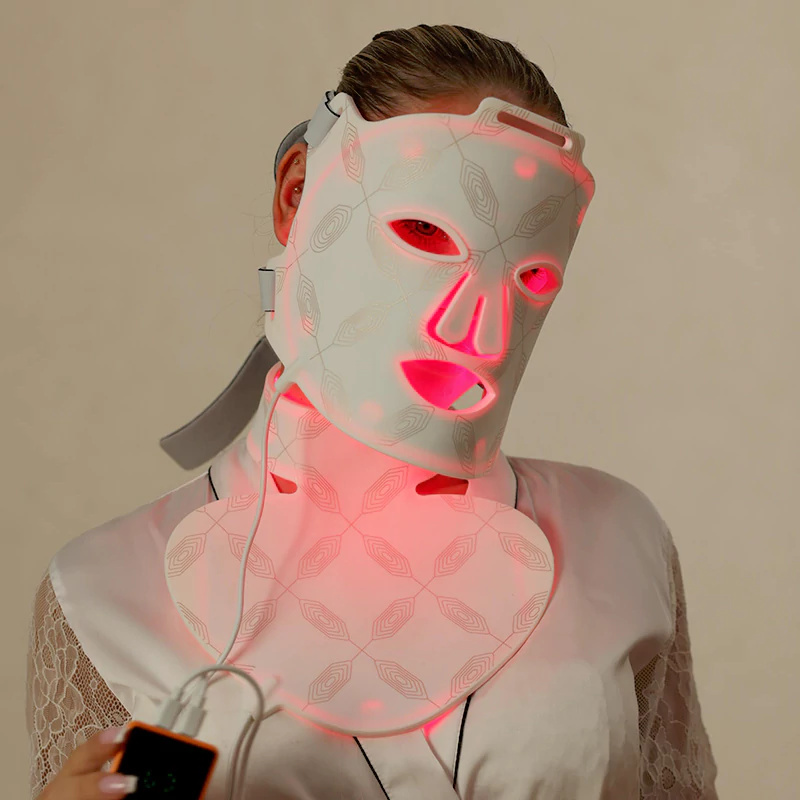
From results to risks, an expert reveals whether this beauty technique actually works.
Of all the new skin-care technologies available to us today, red light therapy is arguably the most effective—and the most misunderstood.
In the past, this powerful treatment (in all device formats) was only available under the purview of high-end skin care experts, but now you can use it in the comfort of your own home. But with changing technology and—let’s be honest—sometimes confusing terminology, it can be difficult to know what’s right for you.
Here, we asked Hafsa Issa-Salwe, an experienced beautician and esthetician who specializes in red light LED (Light Emitting Diode) therapy, to answer your most frequently asked questions about the basics of LED therapy. From its origins to best ways to use it – she discusses its efficacy and explains the benefits of each LED light color.

What is LED therapy
LED were originally developed by NASA with the sole purpose of growing plants in space. LED technology has since “orbited” from space stations to our home planet, emitting specific wavelengths of light that penetrate the skin’s layers and are absorbed by certain skin cells (much like plants absorb light to grow).
Let’s say you want to minimize the signs of aging; red and near-infrared are the wavelengths you need to promote the production of collagen and elastin in fibroblasts, thereby reducing fine lines and wrinkles.
Research shows that LED therapy stimulates cell repair and minimizes inflammation—even destroying acne-causing bacteria and reducing oiliness.
What does LED therapy do
When we think of aesthetic technologies used in clinics, the first thing that comes to mind is LED therapy. LED therapy is very effective in solving many skin problems, such as acne, dullness, and redness. If you have an inflammatory or autoimmune problem, such as rosacea, eczema, or psoriasis, LED therapy can help reduce symptoms. The light emitted by LEDs can enter various layers of the skin depending on the wavelength, making it a safe and versatile beauty solution.
How does LED light therapy work
LED therapy works by using specific wavelengths to trigger reactions, or (in scientific terms) trigger photobiochemical reactions within cells. LED lights produce different reactions in the skin, depending on the wavelength (i.e. color) used.
What are the benefits of each LED light color
Light exists in a spectrum, and LED light is no exception. Each LED wavelength appears as a different color (except near-infrared, which is transparent), and they all have special, unique benefits.
Blue (415nm) reaches only 1mm of the epidermis to create ozone and eliminate Propionibacterium acnes, reducing oil production and minimizing shine, blackheads and clogged pores.
Green (532nm) reaches 2.5mm of the epidermis to reduce melanocytes responsible for dark spots, hyperpigmentation and age spots.
Yellow (590nm) reaches 2mm into the dermis to reduce inflammation, oxidative stress and UVB (burn) and UVA (photoaging) sun damage.
Red (630nm) reaches the dermis layer, increases natural cell energy (ATP), initiates cell regeneration, collagen, elastin and hyaluronic acid, and promotes cell hydration.
Deep red (660nm) reaches the dermis, improving blood circulation and cellular oxygenation, and we see a significant improvement in inflammation, irritation, and redness.
Near infrared (830nm) reaches the dermis, accelerating cell repair, soothing redness, irritation, and strengthening fragile skin.
The most commonly used color is red, especially red with a wavelength of 633nm, because it can promote collagen production.
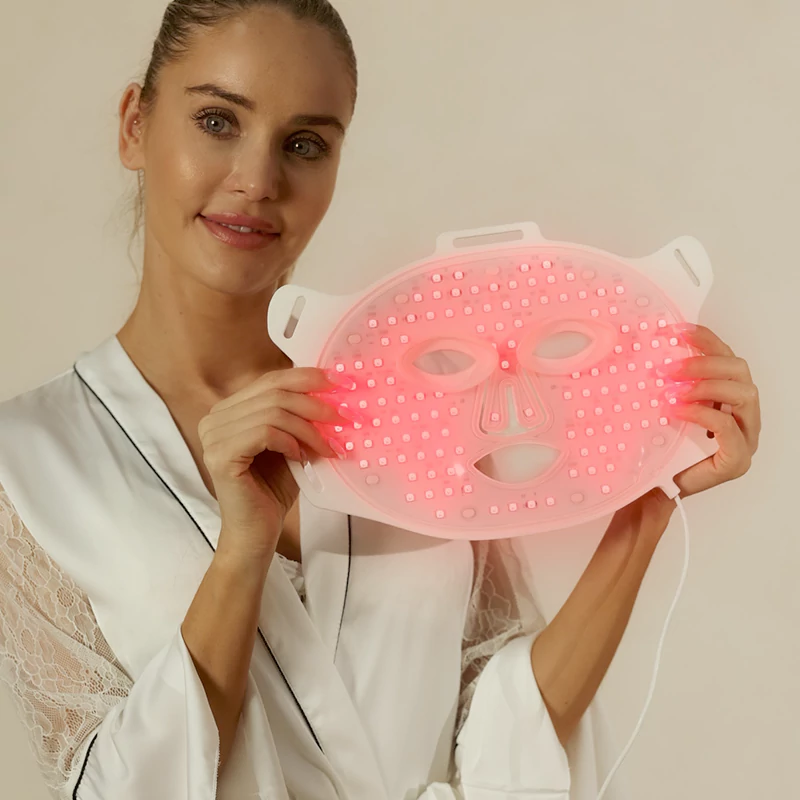
What do LED light devices do for your skin
The best home LED devices have a combination of wavelengths that address the same skin concerns on different levels.
Red light (633nm), infrared light (830nm) work perfectly with blue light (415nm) to minimize redness, inflammation and irritation associated with eczema, dermatitis, rosacea and psoriasis.
For those dealing with breakouts rather than breakouts or visible signs of aging, red light (633nm) and blue light (415nm) are an excellent combination for addressing mild to moderate acne.
Amber is a less well-known (but still noteworthy) color, especially at a wavelength of 605nm. It is great for addressing aging issues. In addition to its skin-soothing properties, amber accelerates cell regeneration, collagen and elastin production. Because our eyes are one of the first places where fine lines appear.
It is because of these benefits that I recommend that my clients use LED therapy regularly at home. Not only can in-clinic treatments be maintained, but their effectiveness can also be enhanced.
Are LED lights safe
Absolutely. LED lights are very safe for almost all skin types and ages. If there are any dangers with LED treatments, they usually only occur if you have a photosensitivity disorder. It is worth noting that if you are taking medications that increase photosensitivity, you may experience some LED treatment side effects, such as burning or redness.
Many clients ask me if they can use LED treatments after Botox or fillers. My advice is to wait about two to four weeks before using LED to prevent the risk of displacement or other complications. If you have just had surgery (whether it is for cosmetic purposes, such as a rhinoplasty, or medical surgery), LED lights can be your recovery partner in dealing with bruising and swelling.
However, after a chemical peel, it is best to avoid using LED for at least twenty-four hours because your skin is so fragile.
How long does it take to see results
All good things come to those who are patient and persevere. How quickly you see results depends entirely on how often you use LED and how severe your skin issues are. Moderate acne, wrinkles and skin texture will always take longer to resolve than mild acne and fine lines – but you should start to see improvements within a few weeks.
If you can’t wait to see results, it’s worth combining at-home LED treatments with clinic appointments and a solid skincare routine. LED light and retinol complement each other (but not on the same day), as well as antioxidants – they are both very effective in addressing the signs of aging. For my acne-prone clients, I recommend regular blue, red and near-infrared light treatments in conjunction with an anti-inflammatory-focused skincare regimen. They usually see results in just a few weeks.
When you add LED therapy to your skincare regimen, you’re guaranteed to see transformative results. There are only a few technologies on the market that can do this, which is why LED stands out as one of the best ways to achieve beautiful skin.